

Source: Dân Việt
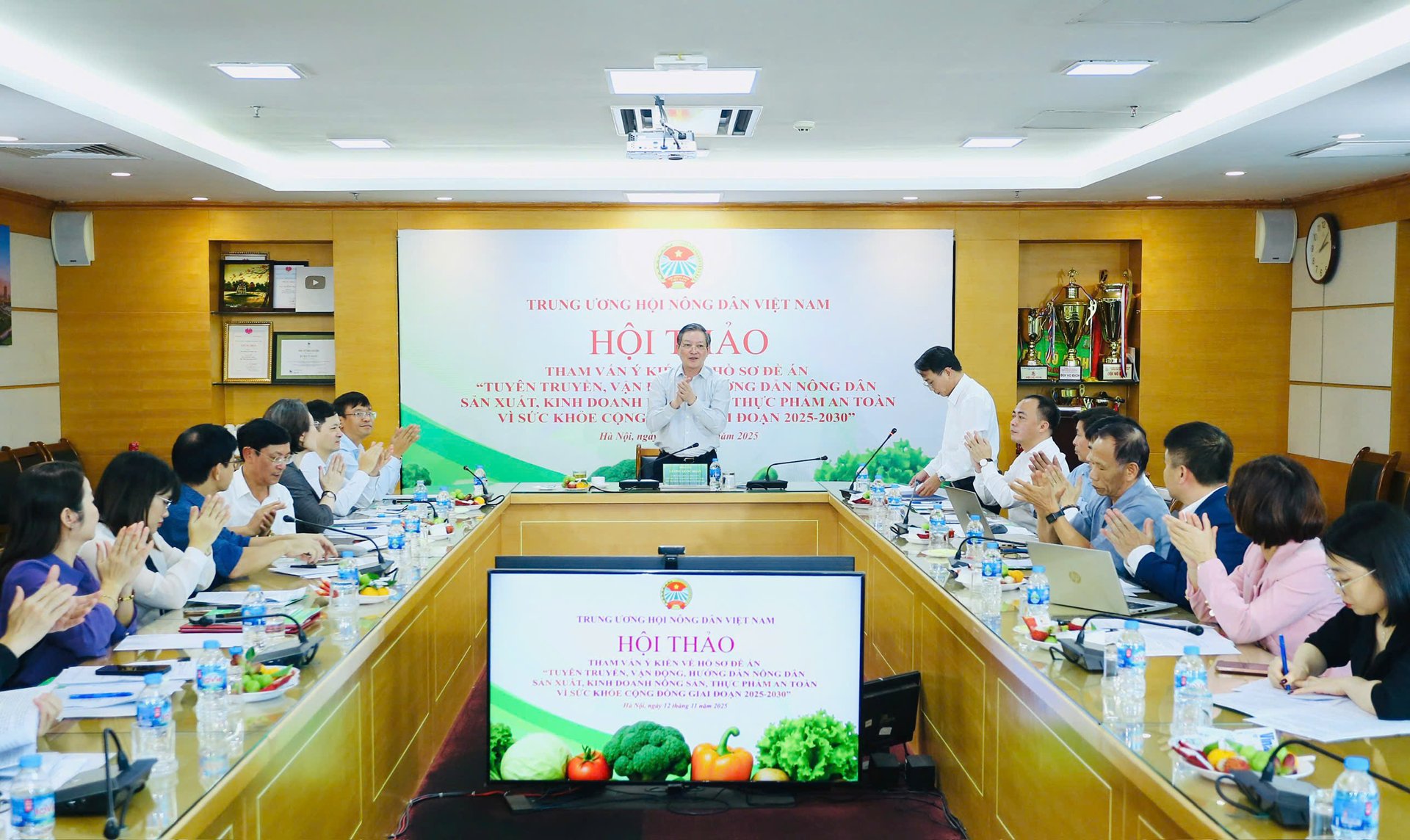
On the afternoon of November 12, the Vietnam Farmers’ Union Central Committee organized a consultation workshop on the draft proposal dossier titled: “Communication, mobilization, and guidance for farmers to produce and trade safe agricultural and food products for community health during the period 2025 to 2030”.
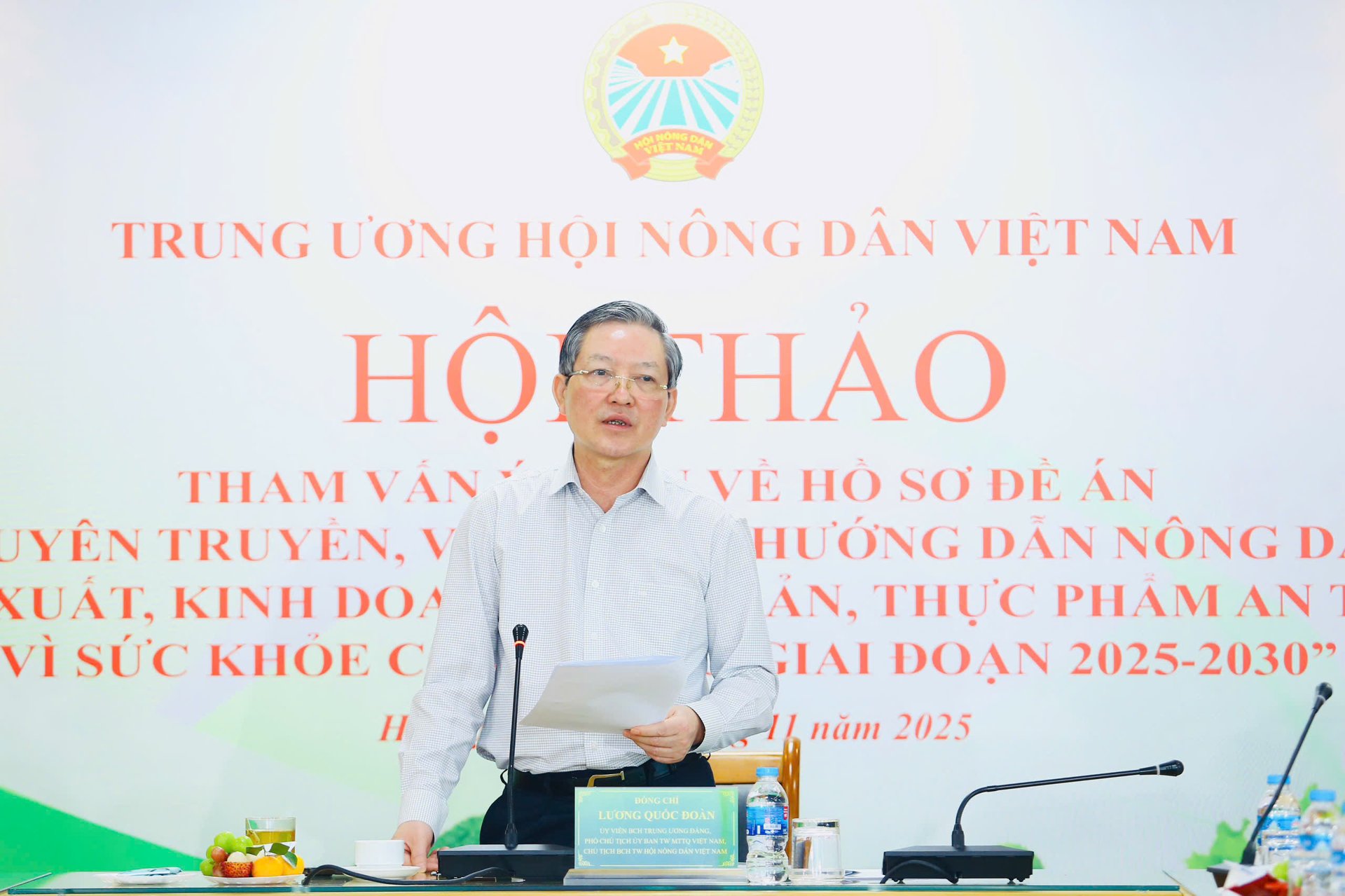
Mr. Lương Quốc Đoàn, Member of the Party Central Committee, Vice President of the Central Committee of the Vietnam Fatherland Front, and President of the Vietnam Farmers’ Union Central Executive Committee, chaired the workshop.
Emphasizing the Role of the Farmers’ Union in Ensuring Food Safety
Delivering the keynote direction at the workshop, President of the Vietnam Farmers’ Union Lương Quốc Đoàn emphasized: In implementing the Government’s mandate under Resolution No. 69/NQ-CP dated May 11, 2024, which issued the Government’s Action Program to implement Resolution No. 46-NQ/TW dated December 20, 2023, of the Politburo on renewing and improving the quality of the Vietnam Farmers’ Union’s activities to meet the requirements of the new era, the Vietnam Farmers’ Union Central Committee has developed the draft proposal dossier “Communication, mobilization, and guidance for farmers to produce and trade safe agricultural and food products for community health during the period 2025 to 2030” for submission to the Prime Minister.
During the drafting and finalization process, the Central Committee has collected feedback from members of the Steering Committee and the Editorial Team; sought input from Farmers’ Unions in 34 provinces and cities; and requested comments from ministries, central agencies, and provincial and municipal People’s Committees.
In addition to the comments from members of the Steering Committee, the Editorial Team, and Farmers’ Unions of 34 provinces and cities, as of November 3, 2025, the Central Committee had received 5 comments from ministries and central agencies and 26 comments from provincial and municipal People’s Committees, of which 16 fully agreed with the draft proposal dossier. Comments submitted after November 3, 2025, are currently being reviewed and incorporated by the Editorial Team.
At the workshop, President Lương Quốc Đoàn requested delegates to focus on contributions to 3 core aspects to ensure completeness and feasibility of the draft proposal.
During the discussion, delegates exchanged views on key tasks and solutions, assignment of responsibilities, and in particular the clarification of coordination mechanisms to meet the new requirement: ensuring unified action within the Vietnam Fatherland Front while maintaining the relative independence of socio-political organizations, aligned with the two-tier local government structure.
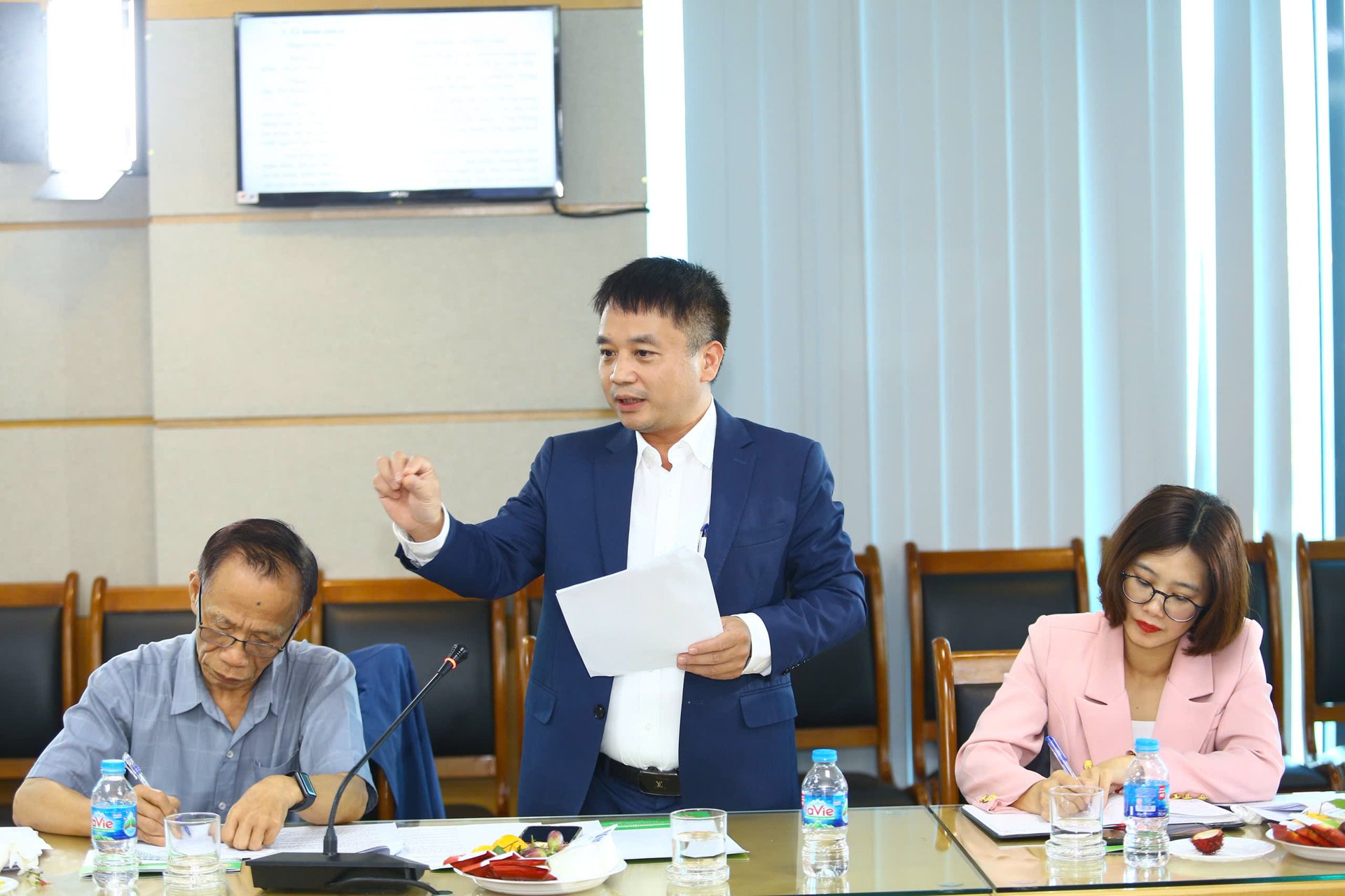
Mr. Nguyễn Tiến Định, representative of the Department of Cooperative Economy and Rural Development, Ministry of Agriculture and Environment, highly appreciated the draft proposal and its explanatory document for adhering closely to guidelines and aligning with orientations of the Party and Government, while clearly highlighting the role of the Farmers’ Union in ensuring food safety.
To secure approval from the Prime Minister and ensure effective implementation, Mr. Định recommended that the proposal strengthen its practical applicability, quantify its targets, define clear coordination and monitoring mechanisms, and place strong emphasis on digital transformation, value chains, social responsibility, and public–private partnerships in safe agricultural and food production. The proposal should specify the responsibilities of Farmers’ Unions at all levels in coordinating with local authorities and ministries (Ministry of Agriculture and Environment, Ministry of Health, Ministry of Industry and Trade). It should also clearly define financial resources, including proportions from the state budget, social mobilization, and international project funding.
The Need to Develop Concrete Programs and Models
Also according to Mr. Định, the proposal should request the Prime Minister to issue a Decision approving the proposal together with its financial mechanism and implementation arrangements.
“At present, there are no financial mechanisms or market incentives to encourage households and cooperatives to shift from ‘commitment’ to ‘certification’. Although there are many VietGAP models (20,224 models), the total certified area across the sector remains small (VietGAP only 2.2 percent). Without input policies (support for certification costs, traceability, or price compensation), farmers will find it difficult to transition. The proposal should introduce specific financial instruments accompanied by targets”, Mr. Định noted.
Contributing to the workshop, Mr. Đỗ Thành Lâm, Director of the SAFEGRO project on food safety, commended the proposal “Communication, mobilization, and guidance for farmers to produce and trade safe agricultural and food products for community health during the period 2025 to 2030” developed and led by the Vietnam Farmers’ Union Central Committee.
“The proposal demonstrates a major shift from technical communication to social behavior change by officially introducing the goal of ‘building a culture of safe food production and consumption among farmers’. This is a new strategic direction that affirms the pioneering role of the Vietnam Farmers’ Union in ensuring food safety and public health. The fourth draft already outlines five indicators that the proposal must achieve by the end of 2030, of which four focus on farmer behavior change and one on capacity building for Farmers’ Union staff. We believe that identifying these indicators is essential for assessing effectiveness after implementation”, Mr. Lâm shared.
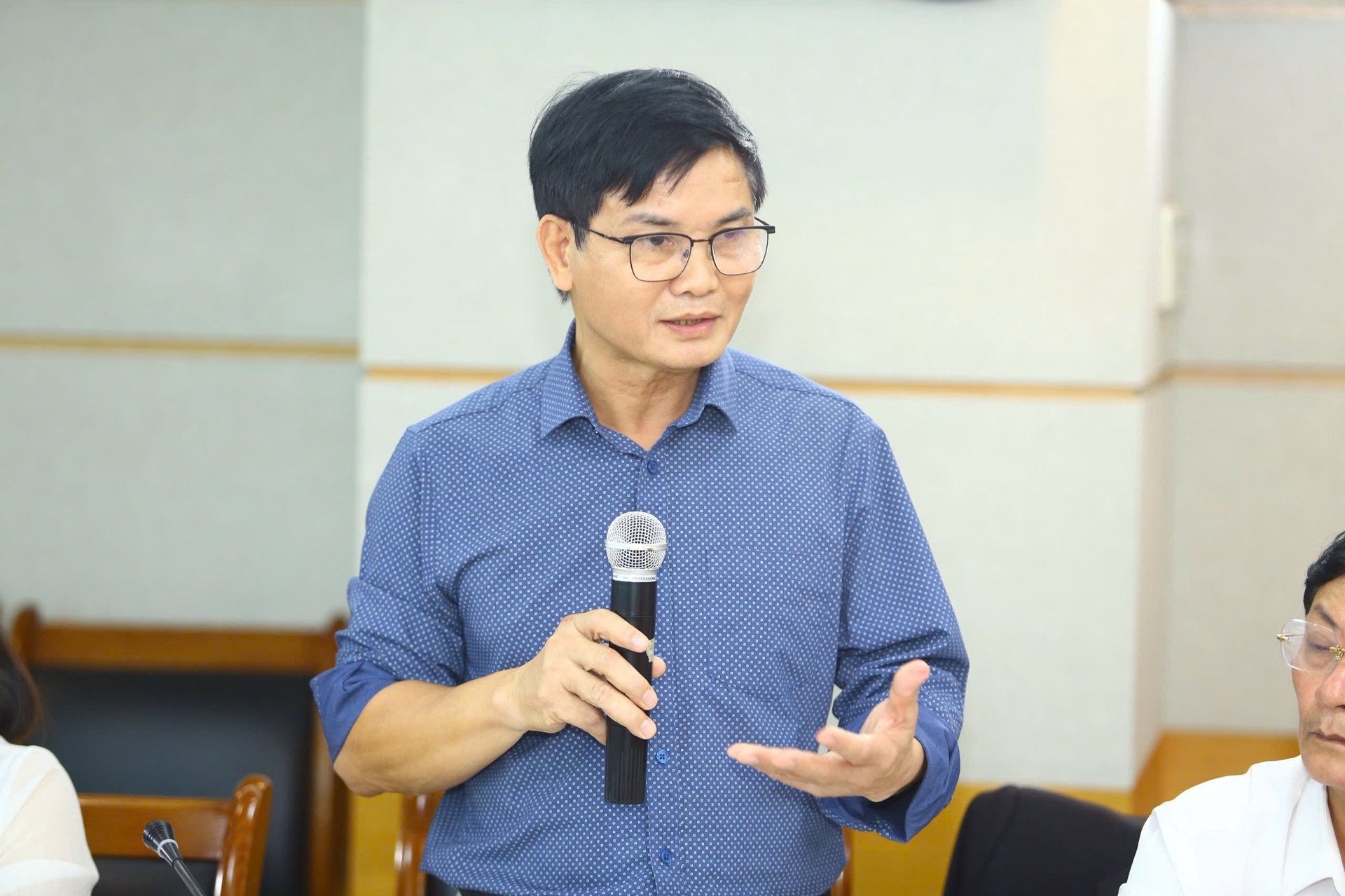
At the workshop, Mr. Lâm recommended refining the approach to the concept of “food safety culture” to avoid vagueness. Instead, it should be linked to specific farmer organizations, where it can be sustained, measured, and effectively scaled.
He also suggested adding a dedicated section in the “Key Solutions” part of the proposal (Section VI) titled: “Building a culture of safe food production and consumption among farmers”, with a corresponding indicator set and detailed measurement methodology as proposed.
The Vietnam Farmers’ Union Central Committee should lead a Training of Trainers program for provincial-level Farmers’ Union staff to cascade training capacity down to grassroots chapters and provide direct support for farmers, cooperatives, groups, and local enterprises. At the same time, he recommended issuing gender mainstreaming guidelines for implementation, including a gender indicator set and incentives for women-led chapters, cooperatives, and models.
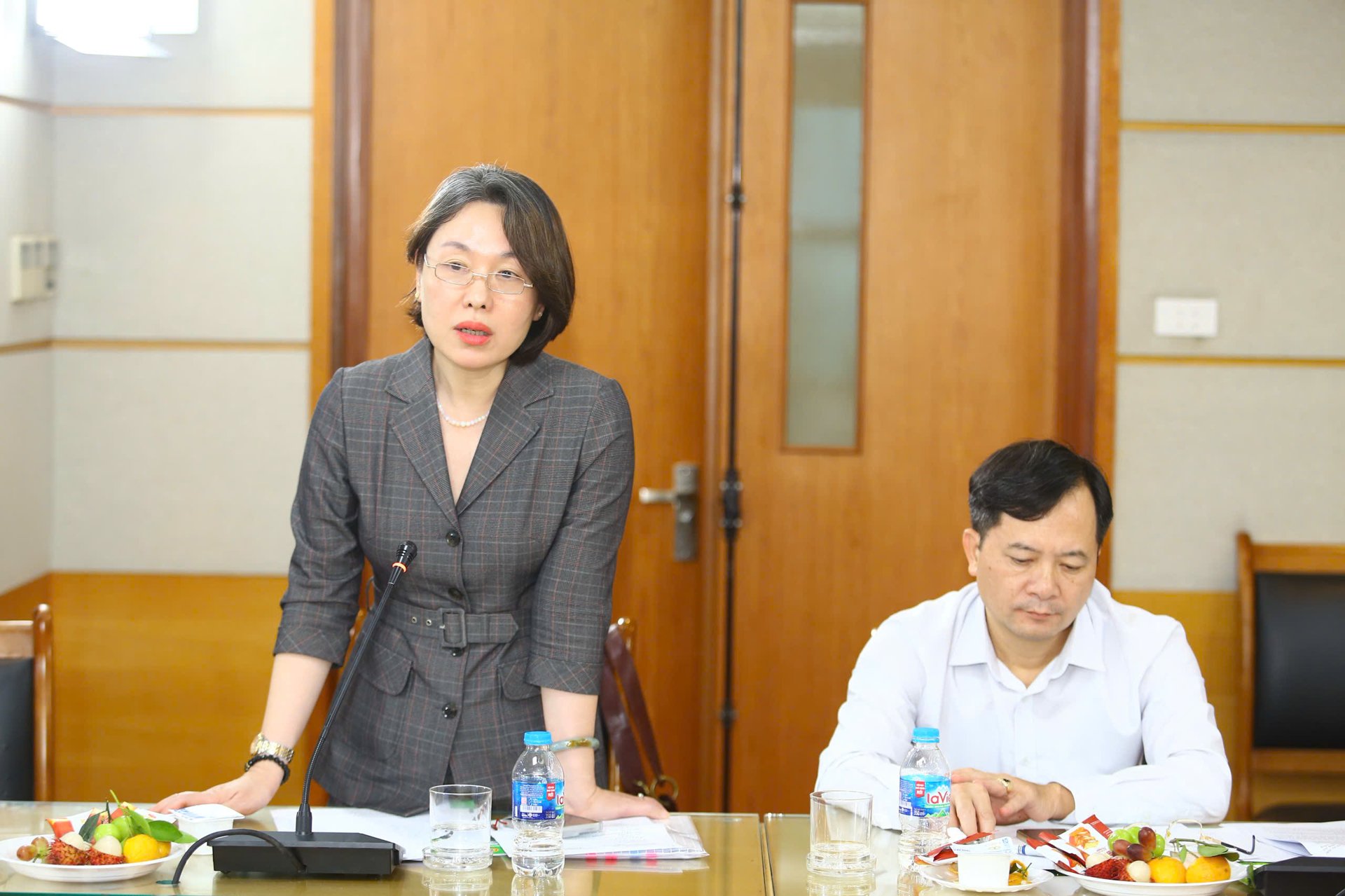
Dr. Trần Công Thắng, Director of the Institute of Policy and Strategy for Agriculture and Environment, suggested that the proposal include concrete programs and models for communication, mobilization, and guidance for farmers to produce and trade safe agricultural and food products for community health during the period 2025 to 2030.
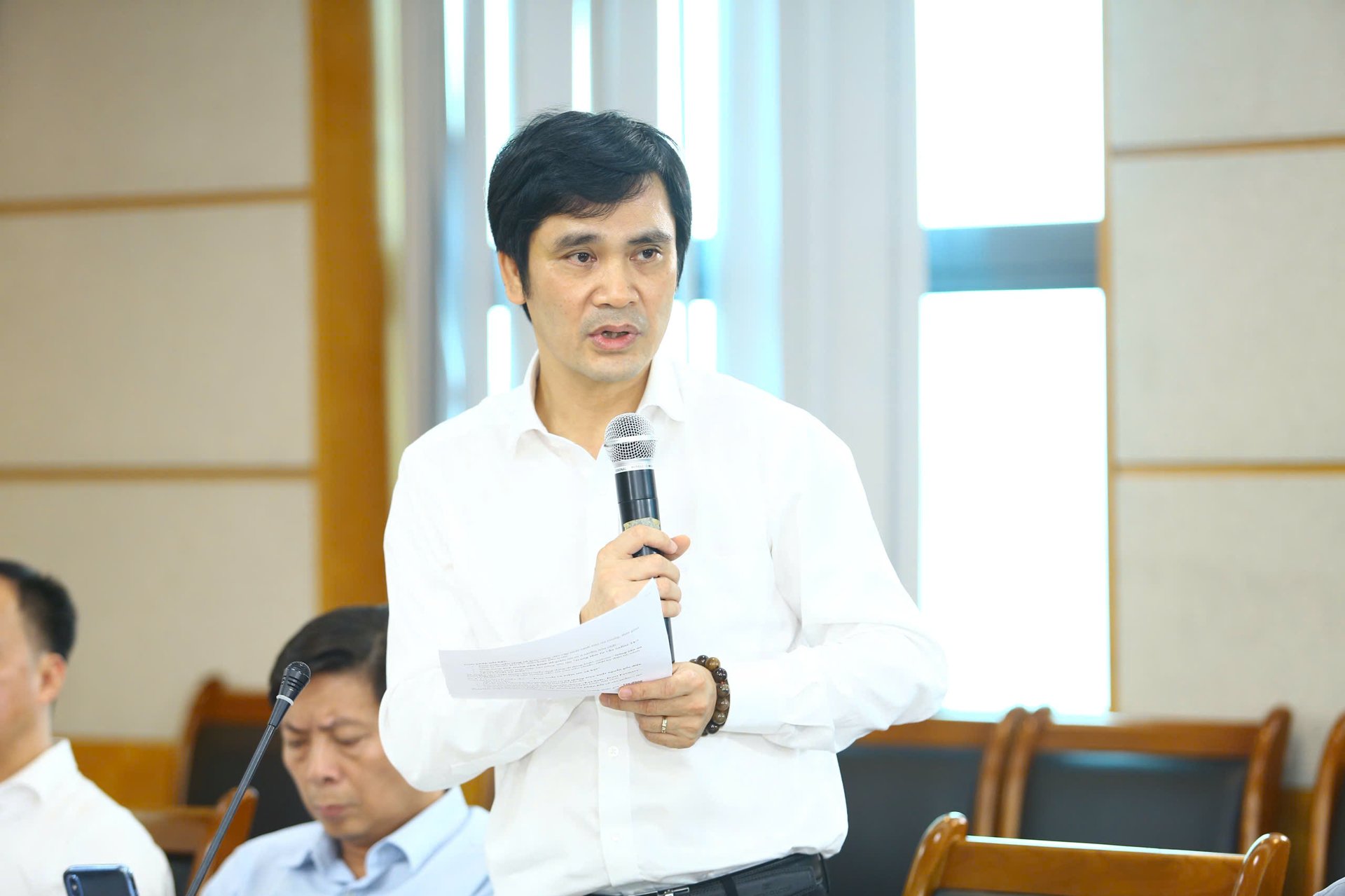
Drawing from international examples, such as Japan’s “Safety culture from school to farm”, China’s “New-type professional farmer training”, and Korea’s “Smart farmers” model, Dr. Thắng proposed piloting a “Safe agricultural product credibility card” system to score farmers and cooperatives based on compliance, and developing a “model safe food production village” pilot program, with the Farmers’ Union playing a core role in implementing these innovations.
In his closing remarks, President of the Vietnam Farmers’ Union Lương Quốc Đoàn acknowledged and highly valued the delegates’ contributions in developing the proposal “Communication, mobilization, and guidance for farmers to produce and trade safe agricultural and food products for community health during the period 2025 to 2030”.
He expressed the hope that ministries and sectors, especially officials with state management experience in food safety, would continue to support the Farmers’ Union in finalizing the proposal to ensure its submission to the Prime Minister in 2025.