

Author: Tô Liên Thu, Food safety specialist, SAFEGRO
The kitchen is more than just a place for cooking. It’s where caretakers plant the seeds of health and happiness for the entire family. However, many people unknowingly make common mistakes during food preparation that can lead to food poisoning or reduce the nutritional value of meals. Are you making any of the following mistakes?
- Improperly Washing Ingredients
 First, let’s talk about the kitchen sink. Many households use the same sink for washing fish meat vegetables and even dishes. This is a risky habit. It creates the perfect environment for cross contamination transferring harmful bacteria from one item to another. Washing raw meat directly under the tap is particularly dangerous. Water splashes can carry bacteria across the sink countertop and nearby food. Raw chicken is especially risky as it may harbor Salmonella which can easily spread and cause foodborne illness. Soaking vegetables in diluted saltwater to kill bacteria remove parasites or reduce pesticide residue is often ineffective despite popular belief. Recommendations:
- Avoid using the dishwashing sink to wash food. Have a separate sink or basin for washing fresh produce
- Washing raw meat is not recommended. If necessary wash meat away from the cooking area preferably in a pot and boil the water afterward to disinfect. Always wash your hands thoroughly with soap after handling raw meat
- Wash vegetables directly under running water to remove bacteria and parasite eggs from the surface. Studies show that rinsing vegetables under running water for more than 30 seconds can remove over 90 percent of surface bacteria
- Improper Thawing Practices
 Leaving frozen food to thaw at room temperature for several hours is a serious mistake as it provides ideal conditions for bacteria to multiply. Refreezing thawed food is also unsafe and reduces its quality. Recommendations:
- Thaw in the refrigerator by placing food in the fridge to defrost gradually.
- Use cold water thawing by placing food in a sealed bag and submerging under running water.
- For whole poultry place the chicken or duck in a pot of gently simmering water making sure hot water fills the cavity. Soak for 10 to 15 minutes then knead the meat gently to ensure even thawing. Cook immediately after thawing.
- Undercooking
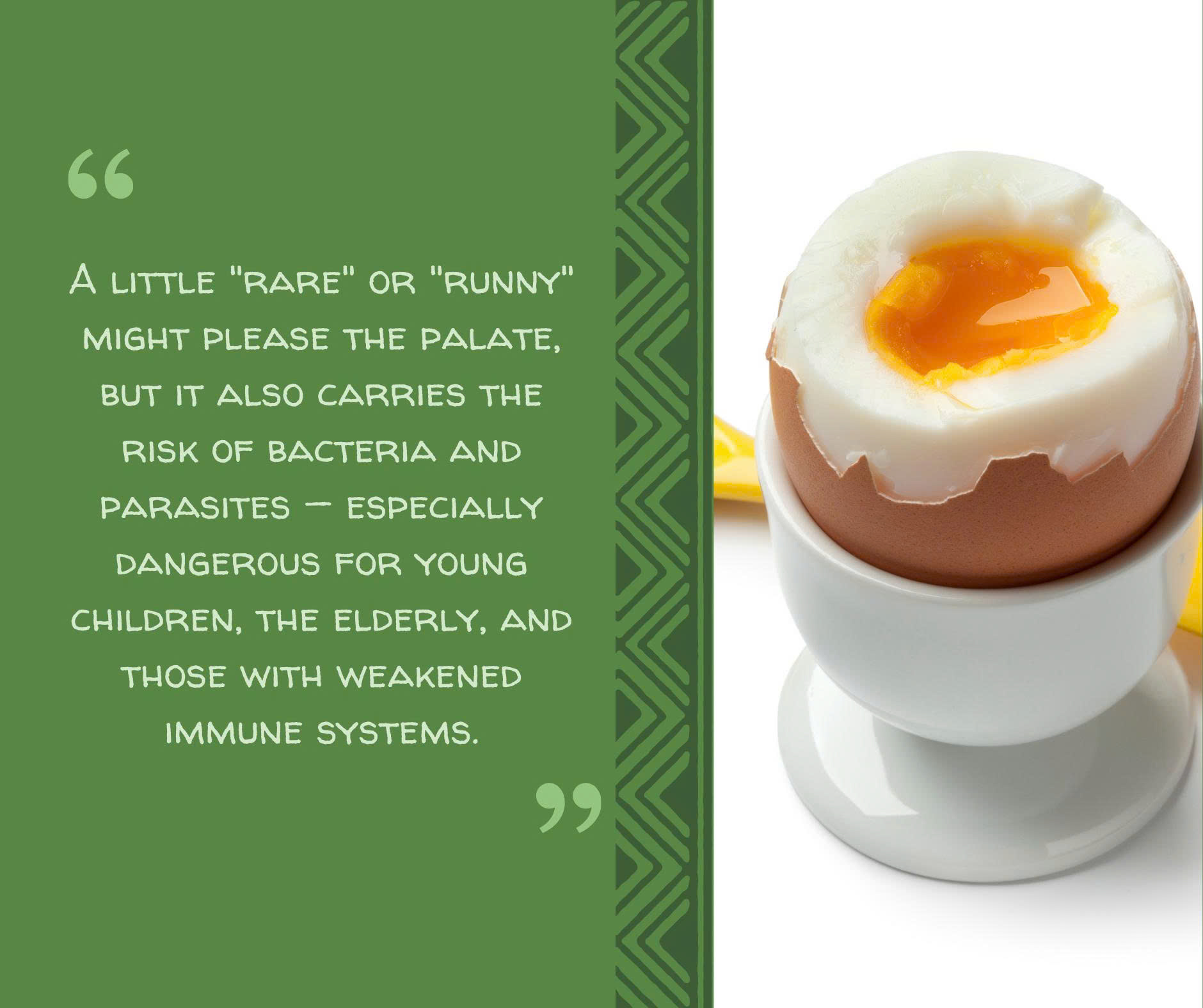 Soft boiled eggs rare meat seared liver. These may be tasty but they can harbor bacteria and parasites. Undercooked food is especially risky for children the elderly and people with weakened immune systems. Recommendations:
- Ensure meat and fish are cooked thoroughly with no pink or red juices remaining
- For eggs and dairy products choose pasteurized versions and cook thoroughly unless labeled safe to consume raw under strict controls
- Failing to Separate Raw and Cooked Foods
 Many people carelessly use the same cutting boards knives or containers for both raw and cooked foods. Storing unwrapped raw meat or fish on upper shelves in the fridge while ready to eat items sit below can also lead to cross contamination and foodborne illness. Recommendations:
- Use separate cutting boards and knives for raw and cooked foods. Label them clearly to avoid confusion
- In the fridge store milk and ready to eat foods on top shelves vegetables in the middle and raw meat and fish on bottom shelves in tightly sealed containers to prevent juices from dripping
- Wash eggs with soap before placing them in the refrigerator
- Overcomplicating Cooking May Deplete Nutrients
 While heat is essential for cooking flavor development and killing harmful microbes excessive heat or prolonged cooking can destroy important nutrients. For example:
- Steaming vegetables can reduce vitamin C content by 20 to 30 percent while boiling may cut it by 50 percent
- Heat also makes proteins in meat eggs and fish more digestible but excessive heat such as deep frying or burning can denature proteins lower their nutritional value and create toxic compounds such as acrylamide trans fats or aldehydes which are harmful to heart and liver health
Recommendations:
- Wash vegetables before cutting to minimize vitamin loss
- Use quick cooking methods like steaming flash boiling or stir frying over high heat to retain nutrients
- Choose cooking oils with a high smoke point for frying
- Cover pots during cooking to reduce nutrient evaporation
- Avoid prolonged cooking or excessive heat unless necessary
- Reuse cooking water from vegetables or meat in soups to retain water soluble vitamins