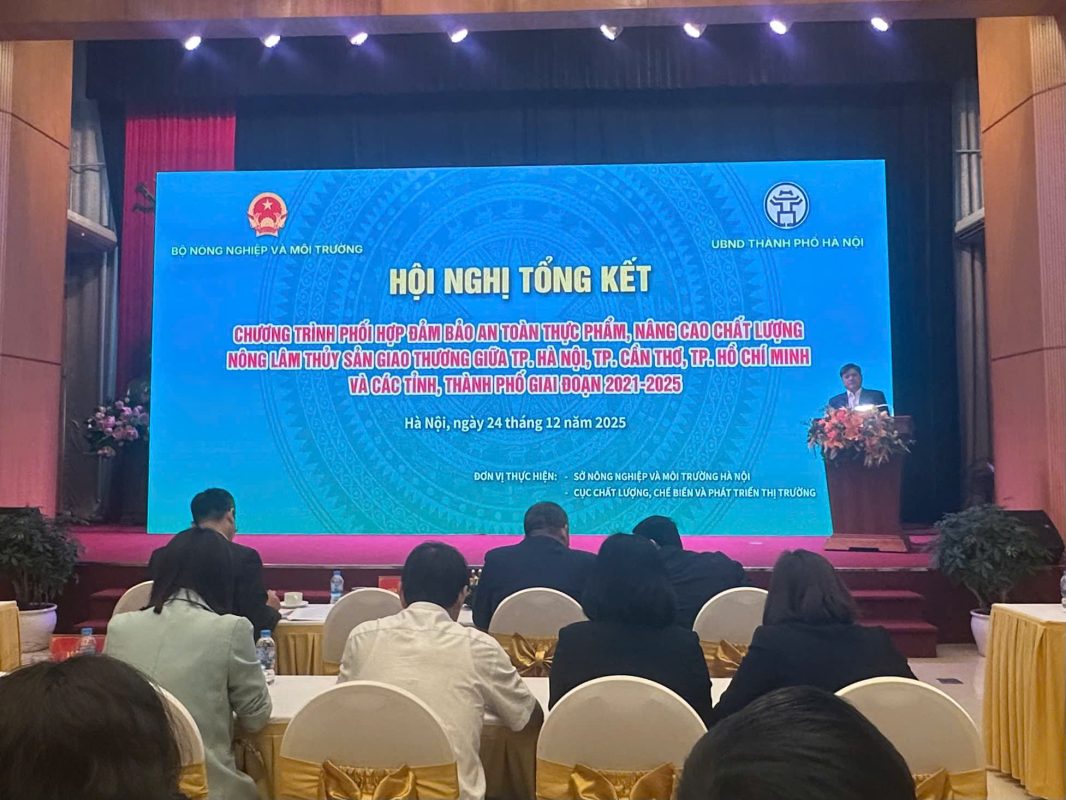
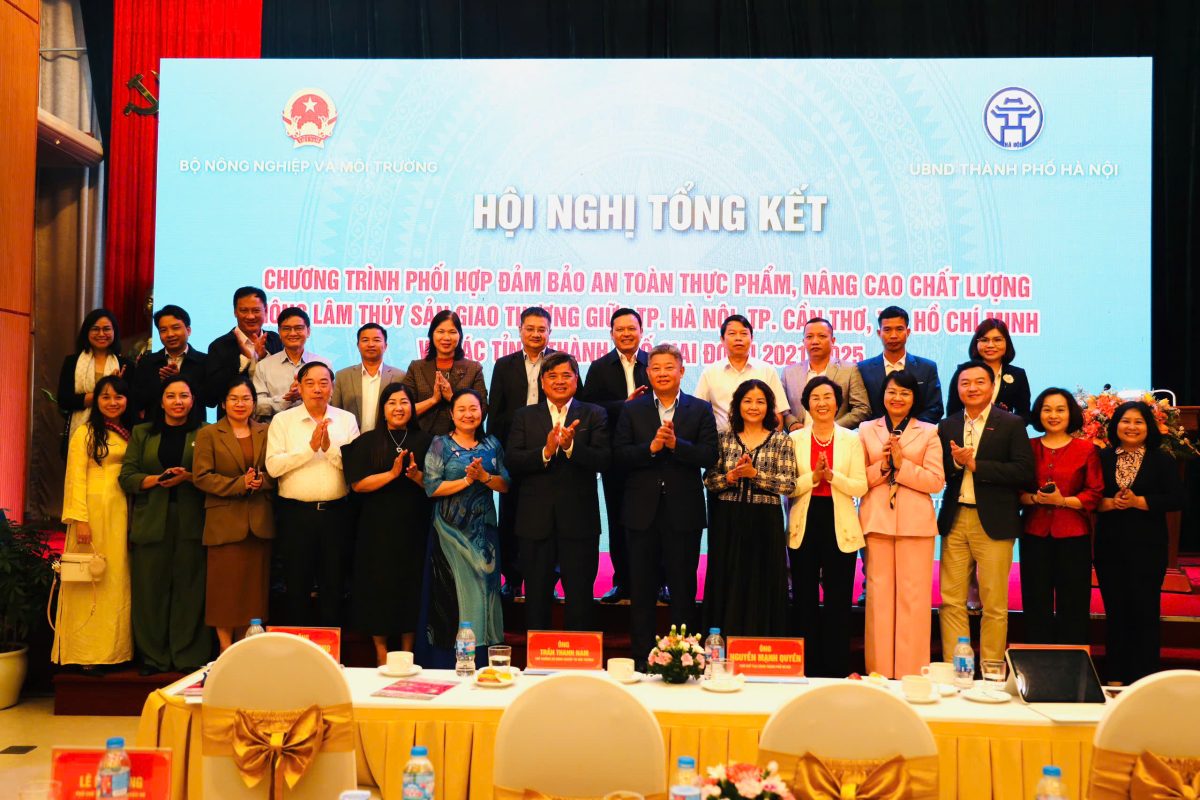
Hanoi, 24 December 2025 — The Conference on the Review of the Coordination Program on Food Safety and Agricultural Trade between Hanoi, Ho Chi Minh City, Can Tho and provinces for the period 2021–2025 concluded with a clear direction for the next phase. Participants agreed that the coming period should focus on deepening regional linkages, strengthening traceability systems and reinforcing food safety control across value chains.
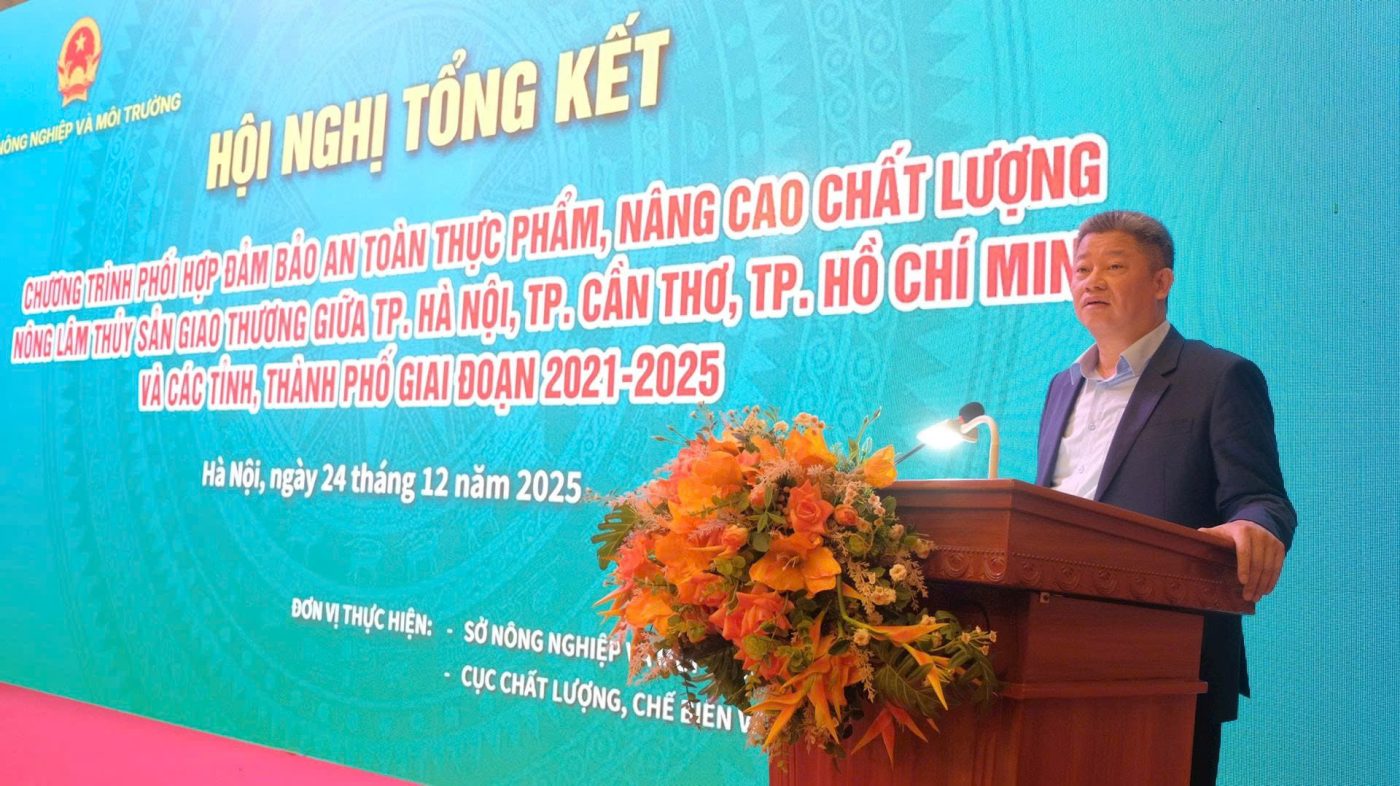
In his opening remarks, the leadership of Hanoi emphasized the city’s role as a major consumption market and underlined that sustained coordination with producing provinces is essential to ensure a stable supply of safe and high-quality food for urban consumers. The city reaffirmed its orientation toward organic and multi-objective agricultural development, linking production with sustainable consumption.
The review report presented at the conference showed that after more than four years of implementation, the program has supported the establishment of over 1,700 food safety value chains, involving more than 5,500 enterprises and cooperatives across 29 provinces and cities. More than 40 percent of raw material areas participating in these chains meet Good Agricultural Practice standards such as VietGAP, GlobalGAP and other international standards, while approximately 96 percent of products are covered by traceability systems. At the same time, trade promotion and supply-demand linkage activities have been carried out regularly, helping ensure that food safety chains are closely connected to actual market access.
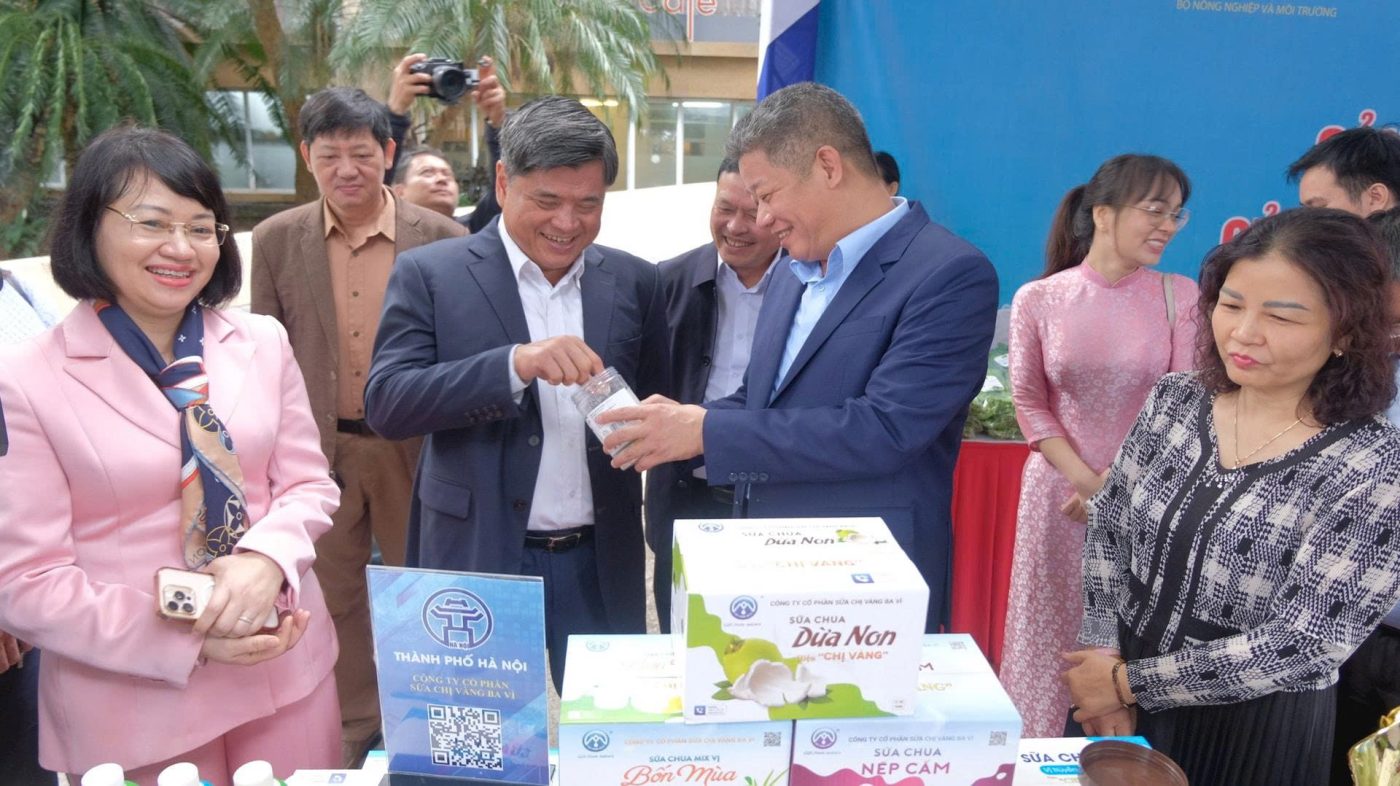
Reports and presentations from participating localities highlighted practical experiences from implementation. Hanoi focused on the application of technology, digital transformation and capacity building for value chain actors. Can Tho emphasized its agricultural supply potential and expressed a desire to further strengthen trade linkages with major cities. Representatives from several provinces noted that the program has facilitated more stable market access for regional specialty products. Enterprises, cooperatives and retail representatives underscored the importance of chain-based approaches in brand development, sustainable consumption and responding to growing consumer demand for transparency.
In his concluding address, Deputy Minister of Agriculture and Environment Trần Thanh Nam reaffirmed that the coordination program was designed from the outset based on market demand and the basic principles of agricultural supply and demand. Large cities, he noted, serve not only as consumption hubs but also as the starting point for defining food safety requirements from the production stage.
“We must affirm that this food safety coordination program was built on the principles of supply and demand for agricultural products. We identify major cities such as Hanoi, Ho Chi Minh City and later Can Tho as major consumption centers where urban consumers have very high demand for food safety and product quality. These demands are what drive us to establish food safety control requirements from the input stage,” Deputy Minister Trần Thanh Nam said.
According to the Deputy Minister, the key achievement of the 2021–2025 period lies not only in the number of food safety chains established, but also in the way food safety has become closely linked with trade promotion, market connectivity, traceability and planting area codes. Based on feedback from ministries, local authorities, enterprises and associations, he confirmed the consensus to continue the coordination program into the 2026–2030 period, with more clearly defined roles and responsibilities.
“I fully agree and support continuing the coordination program for 2026–2030. The content of the next phase must build on the experience of the previous period and be more specific and more closely aligned with practical realities,” he emphasized.
According to the orientation presented at the conference, the Department of Quality, Processing and Market Development will take the lead in developing a dedicated project on food safety value chains linking major cities with producing provinces. The project will clearly define the roles of state management agencies, local authorities, enterprises and cooperatives in organizing and operating these chains.
Deputy Minister Trần Thanh Nam further clarified the division of responsibilities among different territorial groups. Major cities are expected to focus on ensuring distribution channels and market outlets for raw material areas, while leveraging their strengths in research, seed development and high-quality agricultural inputs to support producing regions. Producing provinces, in turn, are responsible for identifying raw material areas, establishing a concrete list of participating enterprises and cooperatives, and proposing infrastructure and technical support linked to traceability and planting area codes.
One of the key priorities for the next phase, the Deputy Minister stressed, is strengthening capacity for food safety testing and certification. He noted that the Ministry of Agriculture and Environment will direct its affiliated testing units while also encouraging the participation of private laboratories in verifying and certifying products within the chains.
“We will direct the Ministry’s testing and certification units and call on private testing centers to participate in verifying and certifying products within these chains,” he said.
Alongside testing and certification, traceability remains a core technical pillar of food safety chain management. This area has also been a significant contribution of the Safe Food for Growth project SAFEGRO, funded by the Government of Canada. During the 2021–2025 period, SAFEGRO supported food safety chains in Hanoi and Ho Chi Minh City to design and operate electronic traceability systems aligned with GS1 standards, integrating food safety events and enabling data-driven management.
In parallel, SAFEGRO assisted in upgrading pork, seafood and vegetable value chains in line with international standards such as HACCP Codex, VietGAP and GlobalGAP. These interventions supported a shift from experience-based management toward risk-based management grounded in documentation, monitoring and scientific evidence. Such models were recognized as consistent with the Deputy Minister’s orientation for the next phase, in which food safety is no longer viewed solely as a technical requirement but as a foundation for regional linkage, trade facilitation and sustainable development.
Regarding international cooperation, Deputy Minister Trần Thanh Nam noted that the Ministry of Agriculture and Environment will propose to the Government of Canada the possibility of expanding SAFEGRO support to additional provinces, with the aim of scaling up proven food safety chain models.
In closing, the Deputy Minister affirmed that the coordination program for the 2021–2025 period represents a significant achievement. He expressed confidence that the 2026–2030 phase will move toward deeper, more substantive implementation, anchored in traceability, testing and strong linkages between production areas and consumption markets, thereby enhancing the effectiveness of food safety management and supporting sustainable agricultural development.